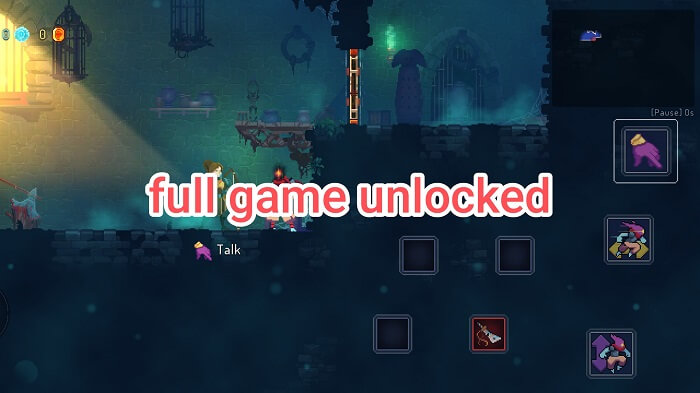
What is Dead Cells Games?
Dead Cells is a fast-paced action-platformer that blends roguelike progression with Metroidvania exploration. Players control a green, animated shapeshifting entity that inhabits a failed experiment and fights through a sprawling, ever-changing castle. Each run begins with a fresh layout: procedurally generated levels, randomized enemy placements, and a rotating assortment of weapons, skills, and modifiers that alter combat and traversal. Combat emphasizes timing, precision, and experimentation; light and heavy attacks, dodges, parries, ranged tools, and environmental traps all interact with a fluid movement system that rewards creative approaches. Permadeath resets the current run on defeat, but not all progress is lost. Meta-progression systems unlock new weapons, skills, and permanent upgrades that expand the pool of possibilities for future attempts, encouraging players to learn enemy behaviors and synergies rather than simply grinding. The game balances risk and reward through valuable temporary power-ups, cursed items with trade-offs, and optional branching paths that can lead to elite enemies or rare equipment. Visuals combine pixel art aesthetics with dynamic lighting, smooth animations, and detailed background design, producing a modern retro look that supports both readability and atmosphere. Sound design and a pulsing soundtrack complement on-screen action and heighten tension during boss encounters. Difficulty scales through both player skill and in-game choices: rune-activated shortcuts and unlockable difficulty modifiers allow tailoring runs for speed, challenge, or exploration. The result is an addictive loop of trial, discovery, and incremental mastery: identification of weapon combos, knowledge of enemy telegraphs, map familiarity, and optimized routes turn early frustration into satisfying competence. Dead Cells invites repeated playthroughs with a steady stream of surprises and emergent moments that reward players who combine reflexes with strategy. Post-launch updates and expansions broaden content, introducing new biomes, bosses, weapons, and modifiers that renew interest and complicate high-level mastery across countless hours of engaging play overall.
Combat in Dead Cells is built around fast decision-making, weapon variety, and mobility. Each weapon archetype carries its own rhythm: daggers favor quick strikes and repositioning, swords offer balanced combos and guard-breaking, hammers deal heavy stagger and area damage, while bows and spells provide zoning and ranged pressure. Secondary items—grenades, traps, turrets, and throwable potions—augment primary weapon playstyles by creating setups, opening windows for big hits, or forcing enemies into vulnerability. Status effects like poison, burn, frost, and bleeding introduce tactical layers: some builds amplify ongoing damage while others exploit crowd control to set up burst windows. A signature mechanic is the limited-use skill slot system, which forces meaningful choices about when to expend potent abilities versus conserving them for critical moments. Dodging and iframe windows are central; timing a dodge to pass through an enemy attack is often more reliable than relying solely on blocking. Weapon synergies and cursed modifiers encourage experimentation—equipping a weapon that scales with critical hits alongside items boosting critical chance yields emergent power spikes, but curses may restrict healing or reduce defenses, trading safety for increased offense. The game’s economy of cells, gold, and scrolls influences build viability: cells surrender access to experimental upgrades between runs, while permanent unlocks slowly expand the available arsenal. Rarity tiers and mutators change the power curve and introduce variability across attempts, ensuring no two runs feel identical. Boss fights test mastery of your chosen loadout; learning boss attack patterns, safe windows, and positional advantages is essential to overcome higher-tier encounters. Replayability arises from the search for perfect combinations—hybrid builds that mix melee and ranged, bleed plus poison stacking, or glass-cannon arrangements that rely on precise play. This richness makes the combat loop both accessible to newcomers and deep enough for players who enjoy optimizing intricate interactions and push limits.
Level design in Dead Cells balances handcrafted set pieces with procedural assembly to deliver a sense of discovery while retaining designed challenges. Biomes are distinct zones—such as the eerie prison, overgrown sepulchers, mechanized workshops, and icy ramparts—each with unique enemy rosters, trap types, and traversal puzzles. Within those themed areas, fixed room templates are shuffled and combined so that familiar challenges reappear in novel contexts; this maintains fairness while preserving unpredictability. Exploration is rewarded through hidden alcoves, breakable walls, and secret doors that conceal powerful weapons, permanent scrolls, or shortcuts that bypass hazardous zones on subsequent runs. Shortcuts and runes create a layered progression: early runs focus on survival and unlocking gates, while later attempts exploit opened paths to reach deeper biomes more quickly, allowing players to attempt riskier builds or boss encounters. Pacing alternates between tight corridor fights demanding micro-skills and open arenas where crowd control and positioning dictate success. Environmental hazards—falling platforms, spike traps, poisonous gas—force players to consider verticality and timing as much as their loadout. Boss arenas are crafted to test mastery of both mechanics and movement; telegraphed attacks, phase changes, and arena hazards transform single encounters into multi-stage puzzles that reward pattern recognition. Map transitions preserve momentum, with well-timed checkpoints that punctuate runs and maintain tension without undue frustration. The procedural elements also support high replay value: while the sequence of encounters changes, a player’s accumulated knowledge about enemy behaviors, door placements, and safe positions remains valuable, promoting incremental learning. Aesthetics and audio cues assist navigation—distinct visual motifs and sound signatures help players instantly identify traps, enemy types, or secret proximity. Overall, level design in Dead Cells harmonizes randomness with deliberate architecture, making exploration feel fresh while offering the satisfaction of mastery as players decode the castle’s hidden rhythms. It rewards curiosity and careful observation.
Dead Cells crafts atmosphere through a synergy of pixel art, motion, and sound rather than lengthy exposition. Visuals are finely detailed: fluid character animations, expressive enemy designs, and layered backgrounds that imply a living, decaying environment. Lighting and particle effects add cinematic punch to every encounter—ember glows, slick wet surfaces, and shafts of light carve space in pixel-scale environments and communicate danger or safety at a glance. The soundtrack shifts fluidly between pulsing electronic beats and haunting ambient passages to match the intensity of on-screen action, with rhythms that accelerate during combat and recede during exploration. Sound effects are deliberately informative; attack cues, enemy growls, the clank of gears, and distant roars function as both atmosphere and gameplay signals that players learn to read. Narrative is economical: fragments of lore appear as item descriptions, environmental storytelling, and brief encounters that suggest a fallen kingdom, failed experiments, and cyclical attempts at escape. This sparse approach invites players to assemble their own understanding and to project personal meaning onto repeated runs, turning emergent gameplay moments into memorable vignettes. The game’s tone can swing between darkly humorous and bleakly tragic, often within a single corridor; this tonal variety keeps the world compelling across many hours. Accessibility options and clear visual contrast make important elements readable even in the heat of combat, while the animation polish ensures telegraphed moves feel fair and legible. Overall design choices emphasize momentum—runs feel kinetic because art, sound, and level pacing are aligned to promote flow. Players who enjoy aesthetic craftsmanship will find Dead Cells rewarding: it demonstrates how tight audiovisual design can heighten mechanical satisfaction and how minimalist storytelling can deepen emotional engagement without slowing the pace. It invites repeated play not only for mechanical mastery but for quieter moments of curiosity and cumulative narrative discovery and reflection.
Longevity and community engagement are key facets of Dead Cells’ ongoing appeal. The game’s procedural nature and deep item interactions foster an active speedrunning scene: players optimize routes, weapon choices, and invulnerability frames to shave seconds off records and to discover new optimal strategies. Challenge-driven play, including optional higher-difficulty modes and self-imposed rules like no-heal runs or limited-weapons contests, generates a continuous stream of creative content and highlight clips for streaming and social sharing. Community discussions dissect balance changes, propose new builds, and compile tier lists that help both newcomers and veterans explore viable strategies without handholding. User-created guides, playthrough videos, and curated challenge runs form a vibrant knowledge base where players exchange ideas about synergies, timing, and progression routes. On platforms that support user content, modding communities have crafted new skins, balance tweaks, and quality-of-life additions that extend replayability and personalize the experience. Seasonal events and content expansions periodically refresh the meta by adding new biomes, bosses, and mechanics that invite reexamination of established strategies. The game’s design also accommodates a wide range of player goals: some pursue fast clears and leaderboard positions, others savor methodical exploration and completionist runs collecting every permanent upgrade, and many simply enjoy the emergent stories that grow out of near-misses and clutch victories. Because runs are relatively short, Dead Cells suits both quick sessions and long play days, making it flexible for differing schedules. The combination of mechanical depth, procedural surprises, and an invested community creates a self-sustaining ecosystem where discovery, competition, and creativity continually renew interest in the product. Players often form small groups to workshop strategies, run co-operative challenge sessions, or create shared leaderboards that document top times and unusual builds regularly. Content creators spotlight novel experiments, which in turn inspire fresh playstyles and maintain a lively conversation around emerging tactics.
 HappyMod