What is XAPK Installer Apps?
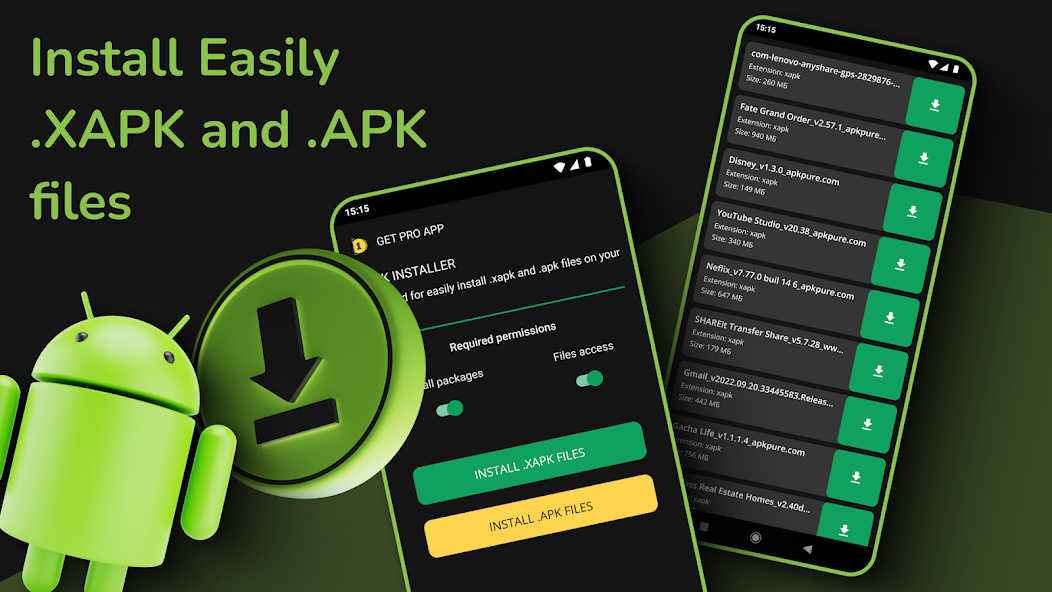
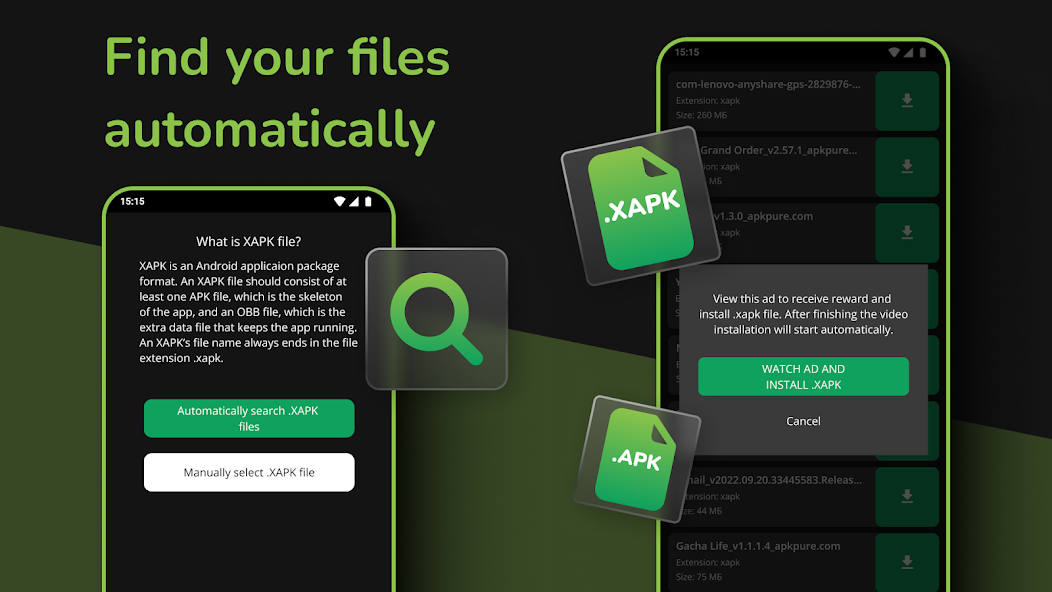
XAPK Installer tools is a specialized utility designed to handle a package format commonly used for complex Android applications and games. Instead of a single APK file, an XAPK combines the base APK with additional resources such as OBB data, expansion files, or split APKs into one compressed archive. The installer tool parses that archive, separates components, and orchestrates their proper placement and registration on the device so the application can access assets and execute correctly. Typical features include exploring the archive contents, extracting the APK and any resource files, batching multiple package installations, and managing installation order when several split APKs must be applied together. Beyond simple unpacking, the tool often integrates metadata parsing so it can read declared package names, version codes, architecture targets and resource requirements before taking action.
For users who handle large mobile apps or distribute offline app bundles, the installer streamlines a process that would otherwise require manual copying of expansion files into specific directories and careful application of multiple APKs. It also detects common structural issues inside an XAPK and provides corrective options such as repackaging or producing a standard APK plus resource bundle. In many cases the tool supports drag-and-drop workflows and offers a preview of what will happen during installation, including target folders, filenames, and expected storage usage. Since the XAPK format bundles everything necessary to run a complex app, the installer’s job is to recreate the runtime layout expected by the original developer, which demands awareness of platform conventions like where expansion files belong and how split APKs interact with the package manager. As a result, XAPK Installer tools are popular among technical users, QA teams, and those distributing large apps outside single-file packaging constraints, because they reduce error-prone manual steps and give clearer visibility into multi-part application bundles.
Under the hood, an XAPK Installer tool implements several technical functions that coordinate file handling and interaction with the operating system’s installation mechanisms. First, it inspects the archive container to detect constituent elements: an APK or multiple APKs, OBB or asset packs, a manifest or metadata file describing dependencies and versioning, and checksums or signatures if present. The tool then validates structural integrity locally by comparing internal manifests and file lists so it can flag mismatches before attempting to apply any changes to device storage. When multiple APKs are present, the installer determines the correct installation sequence and negotiates with the platform’s package installation APIs to install APK splits as a coherent package in a single session where supported, or in the required order otherwise.
File extraction is handled with strategies tailored for performance and reliability. Large expansion files are streamed to their destination paths instead of being fully decompressed into temporary storage, which reduces peak disk usage and speeds up installations on constrained devices. For systems that make use of sparse or compressed OBB containers, the installer can adapt extraction modes to preserve compression formats when applicable. The tool also interprets ABI and SDK target information to skip unnecessary components—installing only the resources compatible with the running environment. Error handling is structured around clear rollback operations: if any step fails, previously written files can be removed or marked for cleanup to avoid leaving incomplete installations. Advanced implementations expose a programmatic interface or command-line options so automated workflows can embed XAPK processing into build pipelines, QA automation, or mass-deployment tasks, while handling logs, exit codes, and diagnostic traces for postmortem analysis.
From a user experience perspective, XAPK Installer tools focus on simplifying a multi-step technical process into an approachable flow. The interface typically emphasizes a clear representation of package contents: a tree view that separates the primary APK, split APKs, resource packs and any auxiliary files, accompanied by readable metadata such as package name, version, supported ABIs and estimated disk usage. Installation wizards walk through necessary actions with actionable choices rather than opaque prompts, letting users accept or skip optional assets and choose installation targets when multiple storage options exist. Progress indicators are detailed, showing not only percent complete but the current subtask and estimated time remaining for large extractions, which is useful when expansion files occupy hundreds of megabytes or more.
Accessibility and multilingual support are common considerations, and many tools provide compact, touch-friendly layouts for mobile devices as well as keyboard-driven modes for desktop or emulator environments. Batch operations allow users to queue several XAPK files and let the tool process them sequentially, with configurable behavior for conflicts such as version downgrades or filename collisions. Built-in viewers for manifests and permissions let users inspect the declared capabilities of the contained APKs before they are applied, and a local activity log records each operation with timestamps, success codes and cleanup actions. Error messages are oriented to remediation steps the tool can perform internally—like repackaging or correcting file placement—so users rarely need to interpret low-level system errors. Overall, the emphasis is on clarity, predictable outcomes and minimizing manual steps while still exposing enough control for power users who need to tailor each installation.
Performance and compatibility are core considerations for XAPK Installer tools, because large game bundles and multi-APK apps place different demands on I/O, memory and platform APIs. Efficient implementations minimize memory pressure by streaming large files directly to final locations and by using buffered I/O with adjustable block sizes to match device storage characteristics. Parallelism is applied where safe: checksum calculations and archive indexing can be parallelized while extraction and installation proceed in a controlled sequence to avoid race conditions. For installations that involve multiple APK files, the tool leverages platform features that support installation sessions or staged installs when available; when the platform lacks such capabilities, the tool must carefully sequence package operations and manage temporary organization of resources to prevent partial deployment states.
Compatibility features include ABI and SDK-aware selection, automatic handling of compressed or sparse expansion formats, and fallback behaviors for legacy devices. The installer keeps a compact compatibility matrix and decision logic so that resources intended for an incompatible architecture are not installed, reducing wasted space and avoiding runtime failures. Tools designed for broad device coverage implement conservative timeouts, retry logic for transient storage or I/O issues, and robust cleanup routines for interrupted installations. Performance telemetry and optional profiling hooks allow advanced users to evaluate bottlenecks such as slow flash storage or throttled write speeds. Additionally, some implementations provide conversion utilities to repackage XAPK contents into alternative distribution formats if a different deployment approach is required for a particular environment. Together, these strategies aim to maximize success rate and minimize installation time across a diverse set of target devices and Android versions.
Security and privacy considerations shape how an XAPK Installer tool manages files and interacts with the platform. The tool typically performs internal checks such as verifying embedded checksums, comparing declared file sizes and, when available, validating embedded signatures against the APKs contained in the archive. It isolates extraction and temporary operations to specific working directories with defined permissions and removes temporary artefacts after the operation completes. Permission previews present upfront what the application being installed will request at runtime so users can make an informed decision before installation begins. Runtime behavior respects the operating system's installation model and does not attempt to circumvent permission prompts or system-level safeguards.
Limitations exist that are intrinsic to the platform: incompatible package signatures, ABI mismatches, or conflicts with previously installed packages require resolution that the tool can detect and explain, providing options such as skipping incompatible files or preparing a detailed diagnostic report for manual review. The installer can also highlight scenarios that may prevent successful deployment, like insufficient free space for large expansion files or locked resource paths, and offer internal remediation tactics such as selective asset installation or queued deferred extraction. In contexts where distribution and licensing matter, the tool maintains neutrality by not modifying licensing metadata or app entitlements; it focuses strictly on placement and registration of files as declared. In short, the XAPK Installer tool combines careful file handling, visible integrity checks, and conservative system interaction to manage multi-part app bundles while minimizing surprises and preserving the runtime expectations of the packaged application.
How to Get Started with XAPK Installer?
- 1. **Download the XAPK Installer**: Search for a reliable XAPK installer app on trusted websites or app stores and download it to your device.
- 2. **Enable Unknown Sources**: Go to your device's settings, navigate to Security, and enable "Install from Unknown Sources" to allow installations from sources other than the Play Store.
- 3. **Download XAPK Files**: Find and download the desired XAPK files from reputable sources. These files usually come compressed and contain an APK file along with additional data.
- 4. **Install the XAPK Installer**: Open the downloaded XAPK installer app and follow the on-screen instructions to install it.
- 5. **Launch the XAPK Installer**: Open the installed XAPK installer app and browse your device for the downloaded XAPK files.
- 6. **Install XAPK Files**: Select the XAPK file you want to install. The installer will automatically extract the APK and additional data, then proceed to install the app.
- 7. **Follow On-Screen Prompts**: Complete the installation by following any prompts that appear during the process.
- 8. **Open the Installed App**: Once installed, navigate to your app drawer and launch the newly installed app.
- 9. **Keep the Installer Updated**: Regularly check for updates for both the XAPK installer and the apps installed through it to ensure smooth functionality.
10 Pro Tips for XAPK Installer Users
- 1. Ensure you enable "Unknown Sources" in your device settings to allow the installation of XAPK files.
- 2. Use a reliable XAPK installer tool to ensure files are installed correctly and without errors.
- 3. Always download XAPK files from trusted sources to avoid malware and security risks.
- 4. Before installing, check if your device has enough storage space to accommodate the app.
- 5. Update your XAPK installer regularly to take advantage of new features and security improvements.
- 6. Backup your existing apps and data before installing new XAPK files to prevent potential data loss.
- 7. Clear cache and data of the installer app if you encounter any installation issues.
- 8. Restart your device after installation for optimal app performance and stability.
- 9. Keep an eye out for app compatibility with your device's operating system version.
- 10. Consider reading user reviews on XAPK files for insights into performance and potential issues.
The Best Hidden Features in XAPK Installer
- Batch Installation: Install multiple XAPK files at once, saving time and effort.
- Automatic File Verification: Checks the integrity of the XAPK file before installation to prevent potential issues.
- Backup Feature: Create backups of apps before installing new updates or versions.
- Custom Installation Path: Choose specific directories for installing apps, providing better organization.
- APK Splits Handling: Supports installation of apps that come in multiple splits, ensuring smoother setup.
- In-app Updates: Allows for easy update of installed apps directly within the tool.
- Compatibility Checks: Verifies device compatibility with the app before proceeding with installation.
- Language Support: Multiple language options that cater to a diverse user base for easier navigation.


 HappyMod