What is Getting Over It Games?
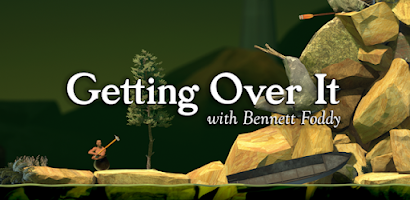
Getting Over It with Bennett Foddy is an unconventional physics-based climbing game that challenges players to move a character encased in a cauldron up a mountain using only a hammer. The core mechanic is simple in description but fiendishly demanding in practice: the player manipulates the hammer to hook, push, swing, and vault across an assortment of objects, ledges, and obstacles. Progress is methodical and frequently tenuous; a single misapplied stroke can send the player tumbling back many meters, sometimes to the very beginning, which is central to the game’s identity. Each attempt requires deliberate attention to the hammer’s angle, the character’s momentum, and the subtle feedback from collisions. The absence of conventional checkpoints or forgiving respawn systems amplifies tension and heightens the exhilaration of small, incremental advances. Visuals are minimal but distinctive, with a surreal arrangement of detritus and sculpted formations that double as precise mechanical affordances. Audio contributes significantly: Bennett Foddy’s philosophical and occasionally sardonic narration accompanies mishaps and successes, framing misfortune as part of a broader meditation on perseverance and learning through failure. Controls are intentionally unforgiving, encouraging mastery through careful practice rather than random button-mashing. This concentrated focus on a single, difficult activity makes the game a compact study in player psychology, teaching patience, adaptability, and the value of measured risk. While some players experience frustration, others find catharsis in the loop of failure and recovery, with every inch gained feeling meaningful. The game’s distilled design distills core gameplay into a punishingly pure loop that rewards precision, spatial reasoning, and emotional resilience. Many players document their journeys through video recordings and guided reflections, and the concentrated difficulty invites repeated attempts that gradually build technical skill and a personal narrative of perseverance. It remains a striking example of minimalist mechanics producing maximal emotional impact for many players.
Getting Over It was created by designer Bennett Foddy and released as a compact indie title notable for its singular focus and provocation of player emotion. Foddy, who previously explored bodily control and failure in experimental works, conceived this project as both a mechanical challenge and a reflective art piece. Development emphasized tightening a small set of mechanics until they revealed deep behavioral patterns, leveraging emergent difficulty rather than scripted obstacles. The design deliberately omits conventional safety nets, with no automatic checkpoints, so the experience becomes about the relationship between repeated trial and gradual competence. Foddy’s voiceover is a signature element, delivering historical anecdotes, philosophical musings, and wry humor that contextualize each setback as part of a larger conversation about learning, humility, and persistence. That narration turns failure into a moment for contemplation, prompting players to reinterpret frustration as informative feedback instead of merely a negative result. Artistic choices, including an austere aesthetic, persistent physics quirks, and a concentrated control scheme, serve the game’s central theme by minimizing distraction and maximizing the significance of each interaction. As an independent design experiment, Getting Over It shows how constraints can provoke creativity: a limited control palette becomes a canvas for subtle mastery, and a high cost of error produces striking personal stories with relatively little content. Critical discussion often centers on the game’s ability to elicit strong feelings despite its brevity, and it raises questions about fairness, challenge design, and the purpose of difficulty in games. In this way, the title functions as a compact philosophical experiment that uses mechanical frustration to prompt reflection about learning, persistence, and play. Its minimal scope allows players to focus on moment to moment decision making, and the resulting anecdotes and community discussions have extended the game’s influence far beyond a simple novelty in surprising ways.
Community response to Getting Over It has been a defining element of its cultural footprint, transforming individual acts of stubborn climbing into shared spectacle. The game’s brutal difficulty and dramatic setbacks created fertile ground for streaming platforms, where viewers could watch players struggle, rage, recover, and sometimes break into tears over a single errant swing. That real time exposure amplified emotional moments, producing viral clips and compilations that showcased both comedic and poignant reactions. Speedrunning and challenge communities also adopted the title, developing unconventional strategies, practice routines, and segmented runs that reframed the experience from casual frustration into disciplined pursuit. Some players practice specific sections to shave seconds off their time, while others set arbitrary self-imposed handicaps to increase difficulty and spectacle. Social discussion often revolves around technique, mental approaches to failure, and how to develop the steadiness required for fine manipulation of momentum. Creators remix and repurpose the game in fan art, music edits, and commentary videos that either celebrate the difficulty or lampoon the melodrama surrounding it. The communal element also includes cooperative practices, like viewers offering calm encouragement during live sessions, which can drastically change a player’s emotional trajectory and performance. Conversely, certain viral moments highlight how hostile or mocking commentary can exacerbate frustration, underlining the social influence on personal gaming experiences. Tournaments and curated showcases occasionally emerge, framing the title as a test of composure as much as mechanical skill. In all these ways, the player base and observer culture have extended the game’s lifespan, turning a concise indie experiment into an ongoing social phenomenon whose stories, memes, and shared hardships persist well beyond completion times or numeric scores. Players trade tips about rhythm and grip, post montages of comeback runs, and sometimes create curated archives of notable climbs and collapses. The culture is surprisingly supportive.
Technically, Getting Over It is built around a robust physics simulation that governs the hammer’s interaction with the environment, and the game’s feel depends heavily on consistent collision response and momentum calculation. The entire experience hinges on fine gradations of force and angle, so accurate input mapping is crucial: on desktop setups, subtle mouse or trackpad motions translate into the hammer’s arc, while on controller and touch interfaces, stick or swipe inputs are interpreted to approximate the same gestures. That translation often requires careful sensitivity settings or intentional practice to achieve the micro adjustments necessary for advanced maneuvers. The level design itself is not level-based in the traditional sense but a continuous set piece of objects and structures placed to create opportunities for skillful grapples, launches, and delicate balances. Performance-wise the game favors stability and deterministic outcomes over flashy graphics, with an emphasis on maintaining predictable physics across sessions so that player skill, not random variance, determines progress. Audio design, particularly the timing and tone of the developer’s narration, is synchronized with player setbacks in a way that complements mechanical feedback rather than obscures it. Error handling is intentionally sparse, reflecting the creative decision to make failure meaningful and recoverable only through player technique. Modders and community tool creators sometimes produce practice maps, slowdown utilities, or replay systems to help players isolate tricky segments and refine strategy, though those tools vary in quality. The small codebase and focused scope make the title accessible for analysis by hobbyist developers interested in how constraint driven design yields emergent depth. In short, the game is a compact engineering exercise where physics fidelity, input fidelity, and level composition combine to create a deceptively complex and surgically precise mechanical puzzle. Mastering its systems rewards patient study, as players learn to exploit momentum and contact precisely.
Playing Getting Over It can provoke powerful emotional responses ranging from acute frustration to unexpected catharsis, and understanding that arc helps manage the experience productively. The game is structured to make mistakes costly, which elevates stress and can trigger impatience, but it also magnifies the satisfaction of incremental success. Players who find themselves flaring with anger often benefit from deliberate pacing: take short breaks after repeated failures, shift focus to a small technical goal, or slow down movements to emphasize precision over speed. Reframing the game as a practice of micro skills rather than a contest against an opponent reduces the sting of setbacks and highlights the value of controlled learning. Recording attempts and reviewing replays can reveal consistent mechanical errors and transform random frustration into targeted improvement. Another useful approach is to set modest session objectives, like mastering a specific transition or holding a balance for a certain duration, which makes progress measurable and morale-boosting. Some players adopt ritualized routines, for example warming up with gentle swings, breathing intentionally during tense stretches, or using rhythmic counting to stabilize input, because such habits transform adrenaline into steady performance. It is important to accept that emotional volatility is a normal reaction to deliberately punishing systems; recognizing this normalcy prevents shame and encourages constructive habits. Many players report that the most memorable moments are not solely the victories but the narratives of recovery, the small sequences that required several attempts to knit together. Sharing stories with peers about specific climbs, while avoiding toxic commentary, can enrich the experience and normalize setbacks. Ultimately, Getting Over It offers more than a mechanical challenge: it presents an opportunity to practice composure, incremental learning, and reflective play, where emotional growth often parallels mechanical improvement. Embracing that process turns each stumble into a meaningful lesson over time.
 HappyMod