What is SpongeBob: Krusty Cook-Off Games?
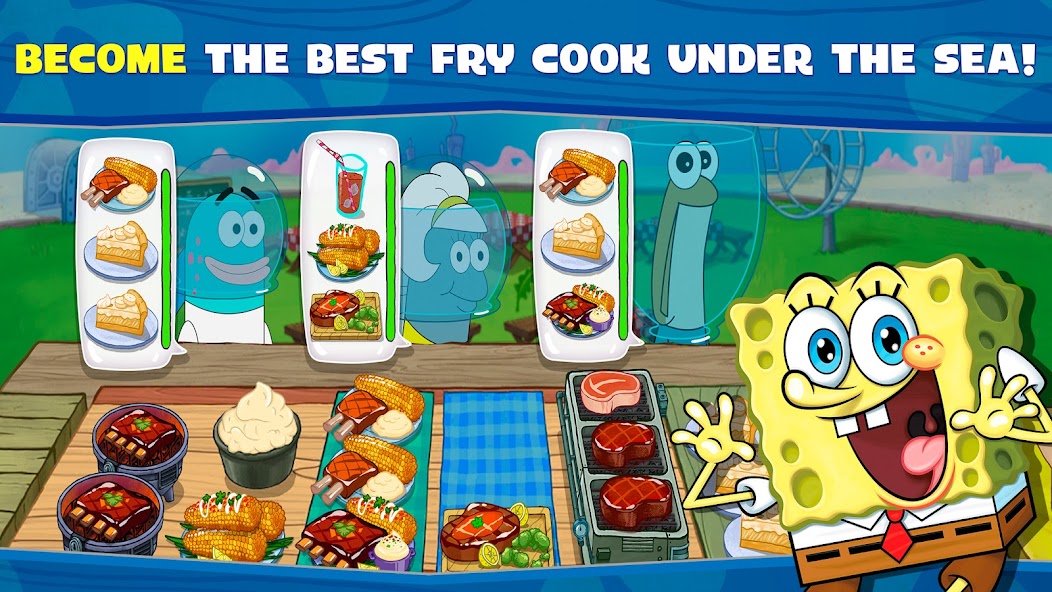
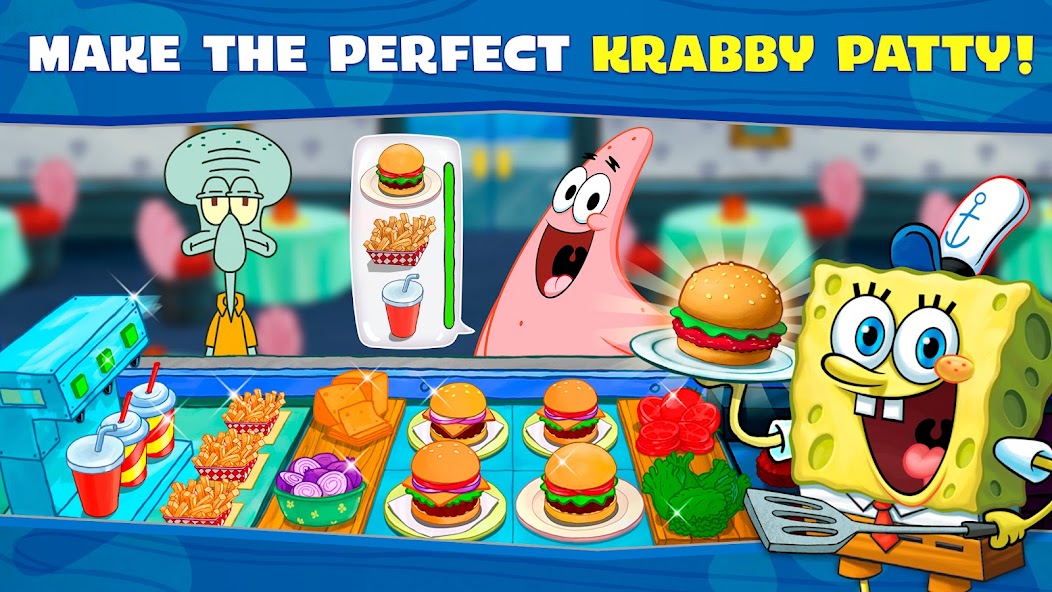
SpongeBob: Krusty Cook-Off is a lively, character-driven time-management cooking game set in the colorful world of Bikini Bottom. Players step into the role of an energetic cook who learns to operate and run multiple Krusty Krab locations, preparing iconic menu items that fans of the series will recognize. The core appeal lies in fast-paced order fulfillment: customers place requests, and players must assemble, cook, and serve dishes quickly to keep satisfaction high and earn tips and rewards. The tone of the experience is lighthearted and family-friendly, blending cartoonish humor and whimsical animations with straightforward touch controls. Levels are structured around progressively challenging shifts, and each restaurant presents a different mix of available ingredients, equipment, and layout constraints that keep gameplay varied. In addition to single-session play, the title places emphasis on short bursts of activity that suit mobile play patterns — quick shifts can be completed in minutes, while longer campaigns unfold across many sessions. This balance makes the game accessible to casual players and engaging enough for those who enjoy optimizing routines and improving performance under pressure. Visually, the aesthetic adheres closely to the SpongeBob brand, using bright colors, exaggerated expressions, and familiar locations to build a sense of continuity with the show. The game’s soundtrack and sound effects tend to emphasize comedic timing and satisfaction cues, reinforcing feedback when orders are completed or when combos are achieved. Overall, this product targets players who appreciate animated franchises, enjoy time-management mechanics, and like incremental progression systems that reward skillful multitasking and strategic upgrading of equipment and menus.
The gameplay loop centers on efficient multitasking and systematic improvement. Each shift begins with a flow of customer orders that must be fulfilled by tapping, dragging, and combining ingredients across a sequence of cooking stations. Typical tasks include patty grilling, bun toasting, assembling ingredients, adding condiments, and packing orders for delivery. Players are encouraged to prioritize tasks by urgency and reward — premium orders or customers with shorter patience bars require immediate attention, while slower orders can be queued. A combo system frequently rewards serving multiple customers in quick succession, multiplying coin and star gains that feed progression. Difficulty ramps through the introduction of new recipes, additional order variations, and faster customer arrival rates, which together demand sharper time management and equipment placement decisions. Upgrades play an important role: faster cooking stations, larger ingredient capacities, and helper characters or automations reduce manual workload and enable higher throughput. The game often mixes single-level objectives like earning a target number of stars with longer-term goals such as renovating or customizing restaurants. Periodic challenges or limited-time events introduce special recipes and modifiers that alter standard mechanics, requiring players to adapt strategies. Controls are optimized for touchscreens, with clear visual cues and a forgiving input system to support rapid interactions. Replayability comes from evolving goals, a layered upgrade tree, and the satisfaction loop of shaving seconds off routines while pursuing higher ratings for each restaurant.
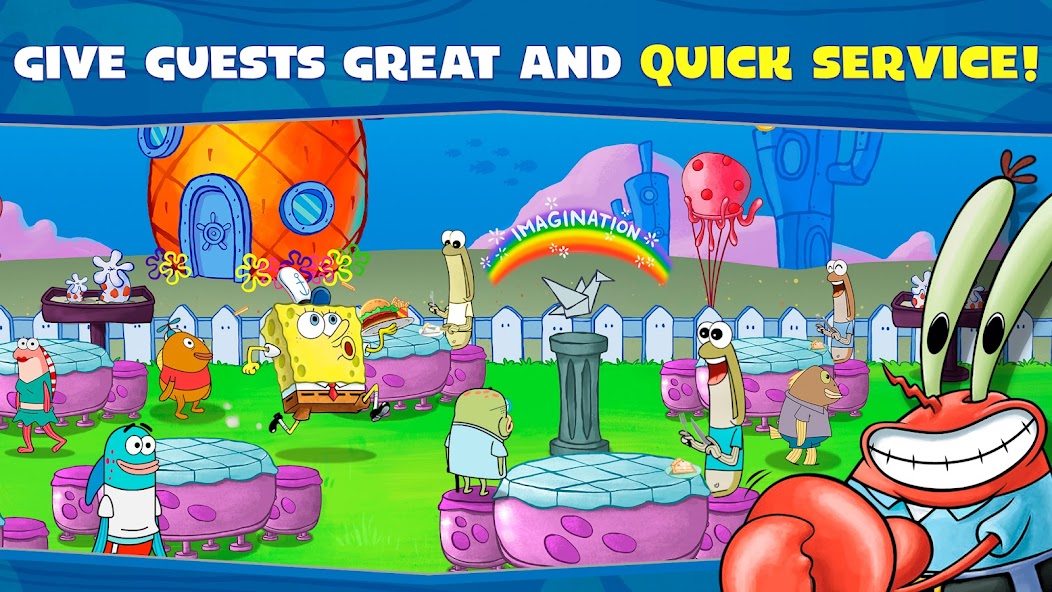
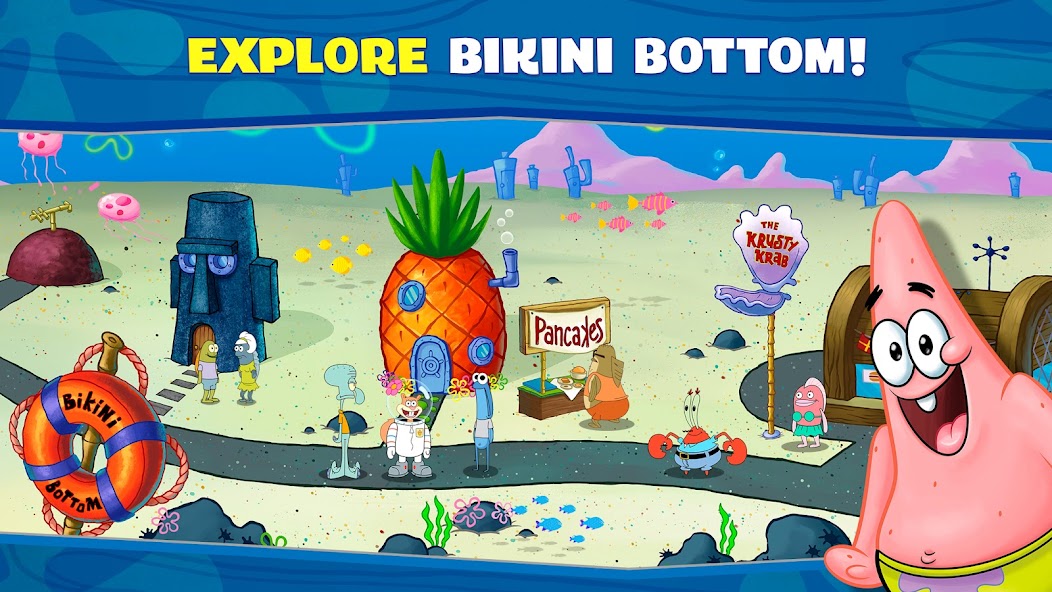
A significant draw is how the game integrates beloved SpongeBob characters and Bikini Bottom settings into the cooking mechanics. Iconic faces like SpongeBob SquarePants, Squidward, Mr. Krabs, Sandy, and Plankton often appear as customer types, helpers, or special event figures, each bringing personality to interactions and occasional gameplay modifiers. For example, a certain character might prefer a particular menu item, show distinct patience behaviors, or unlock themed decorations for a given Krusty Krab. Environments extend beyond the canonical Krusty Krab to include themed locales inspired by the show’s wider world, providing visual novelty and occasional unique recipes tied to the setting. Character-driven narrative beats and animated cut-ins punctuate progression, offering humorous shorts and context for new restaurants or menu items. Voice snippets, sound effects, and stylized animations add a layer of charm that heightens engagement; seeing SpongeBob exuberantly celebrate a perfectly timed order or Squidward grumble at a chaotic rush helps maintain a connection to the franchise. The integration of characters also supports gameplay variety: special shifts or events might cast players in roles such as catering for Bikini Bottom festivals or helping a friend open a pop-up diner, introducing temporary mechanics and objectives. Beyond fan service, the characterization supports player motivation: upgrading characters, unlocking alternate outfits or expressions, and collecting themed items provide collectible goals that complement the core cooking gameplay and encourage continued play.
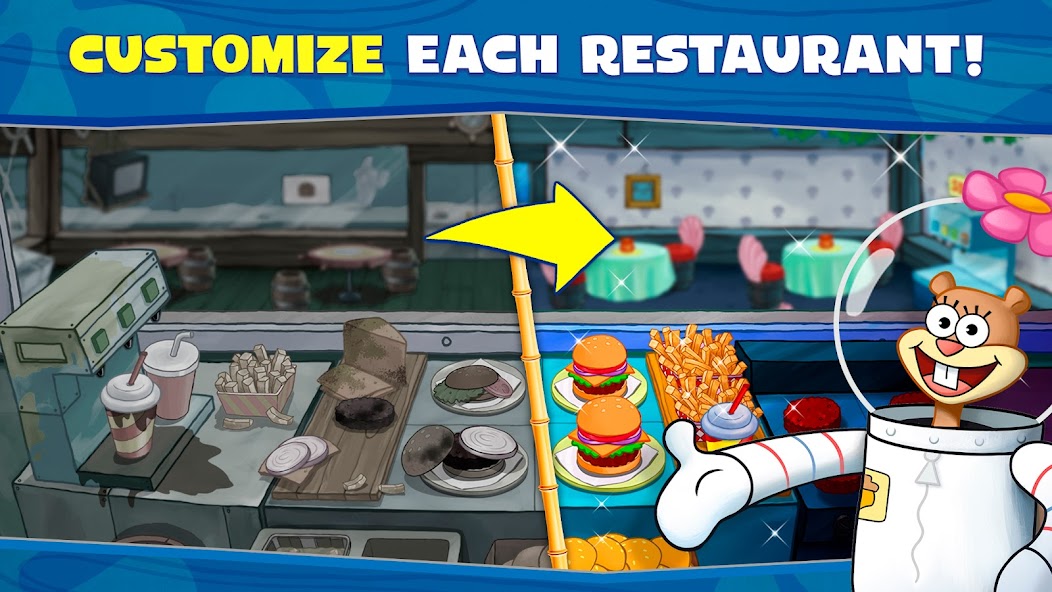
Progression systems and in-game economies shape how players experience long-term advancement. Typically, multiple currencies are available: a common currency earned from almost every successful order, and rarer premium resources awarded from high performance or special events. Coins are commonly used for straightforward upgrades like faster grills or larger storage, while rare tokens unlock more impactful improvements or exclusive visual items. Experience points or star ratings drive level-ups and unlock new recipes, stations, and restaurants. Players are presented with upgrade choices that influence playstyle — investing in throughput improvements speeds up all orders, while investing in specialty upgrades raises revenue per customer or enhances the value of combos. Customization is often a major motivator: decorative items, themed furnishings, and cosmetic skins let players personalize their restaurants and chefs, creating a sense of ownership. Time-limited events and rotating content provide access to exclusive decorative themes, special recipes, or seasonal challenges, encouraging players to return regularly to collect unique rewards. While monetization elements exist, progression can typically be pursued through consistent play and strategic use of earned resources, with performance optimization rewarding skillful play. Leaderboards or asynchronous competitive elements may be included to foster a sense of community competition, offering extra rewards for top performers or weekly ranking achievements. The balance between free progression and monetized accelerators usually aims to maintain fairness while offering optional shortcuts for those who prefer faster advancement.
Visually and aurally, the game leans into the lively, exaggerated style of its source material, delivering colorful locales, playful animations, and distinct sound cues that make each action feel satisfying. Graphical polish shows up in expressive character reactions, animated garnishes, and dynamic kitchen effects that highlight successful combos or critical failures. Audio design supports feedback and pacing, with upbeat music during peak service and acoustic cues that alert players to urgent orders or completed dishes. From a player-experience perspective, the game offers high replay value through layered challenge and meaningful choice: optimizing order flow, selecting the right upgrades, and mastering special event mechanics all contribute to a growing toolkit of strategies. Educationally, the title can help build and refine cognitive skills such as task prioritization, hand-eye coordination, and rapid decision-making in a pressure environment, while also encouraging resource management and planning. Practical play tips include learning the most frequent recipe patterns, staging ingredients to reduce travel time between stations, and timing upgrades to coincide with new recipe introductions. Game longevity is supported by regular content updates and community-driven events that introduce new mechanics and keep the meta fresh. For players seeking a casual yet skillful time-management experience wrapped in a familiar animated universe, the game provides approachable systems with depth that can be explored incrementally, offering satisfaction both in short sessions and in longer-term optimization projects.
How to Get Started with SpongeBob: Krusty Cook-Off?
- 1. **Download the Game**: Install SpongeBob: Krusty Cook-Off from the App Store or Google Play Store.
- 2. **Create an Account**: If prompted, sign up or log in using your email or social media accounts to save your progress.
- 3. **Tutorial**: Complete the tutorial levels to learn the game mechanics, including cooking orders, managing time, and serving customers.
- 4. **Explore Levels**: Progress through various restaurants and locations, unlocking new recipes and ingredients as you advance.
- 5. **Upgrade Equipment**: Use in-game currency to upgrade cooking tools and appliances, improving your efficiency and service speed.
- 6. **Complete Challenges**: Take on daily and event challenges for additional rewards, which can help you level up faster.
- 7. **Collect Characters**: Unlock and collect different SpongeBob characters, each offering unique bonuses and abilities.
- 8. **Join Events**: Participate in seasonal events for special rewards and exclusive content.
- 9. **Manage Resources**: Keep an eye on your ingredients and manage supplies to ensure you can fulfill customer orders without delay.
- 10. **Practice Time Management**: Focus on cooking and serving orders quickly to maximize tips and customer satisfaction.
10 Pro Tips for SpongeBob: Krusty Cook-Off Users
- 1. Master the Cooking Combos: Experiment with different ingredient combinations to create unique dishes that can earn you bonus points.
- 2. Upgrade Your Kitchen: Prioritize upgrading your cooking equipment to improve efficiency and reduce cooking times.
- 3. Focus on Customer Orders: Pay attention to the specific preferences of your customers to keep them happy and earn extra tips.
- 4. Practice Multi-Tasking: Learn to manage multiple orders simultaneously to maximize your output during busy periods.
- 5. Time Management: Balance your cooking times with serving customers to ensure no one leaves unhappy.
- 6. Participate in Events: Join special events for exclusive rewards and opportunities to earn rare ingredients or decorations.
- 7. Customize Your Character: Personalize SpongeBob or other characters to improve your gameplay experience and connection to the game.
- 8. Complete Daily Challenges: Take on daily objectives for extra coins and resources to help grow your establishment.
- 9. Learn Cooking Patterns: Familiarize yourself with the cooking patterns of different dishes to reduce mistakes and streamline processes.
- 10. Engage in Competitions: Compete with other players in challenges to sharpen your skills and gain additional rewards.
The Best Hidden Features in SpongeBob: Krusty Cook-Off
- 1. **Time Challenges**: Certain levels feature time-limited challenges where players must complete a specific number of orders within a set timeframe to earn bonus rewards.
- 2. **Character Boosts**: Unlocking different characters provides unique boosts, such as faster cooking or increased customer patience, enhancing gameplay strategy.
- 3. **Ingredient Combinations**: Mixing different ingredients can yield special recipes that grant extra points or serve specific customer cravings, adding depth to the cooking mechanic.
- 4. **Hidden Collectibles**: Throughout the game, players can discover hidden collectibles that unlock special bonuses or customization options for their restaurants.
- 5. **Daily Rewards**: Logging in daily grants players bonuses, which can include coins, gems, or exclusive items that help progress in the game.
SpongeBob: Krusty Cook-Off Faqs
How do I unlock new recipes in SpongeBob: Krusty Cook-Off?
You can unlock new recipes by completing levels and missions successfully. As you progress, you will receive rewards that include new dishes, which allow you to expand your menu.
What are the different game modes available in the game?
The game features multiple modes, including Story Mode and Events Mode. In Story Mode, you follow quests to build your restaurant, while Events Mode consists of time-limited events that offer unique rewards.
How can I improve my cooking speed in the game?
Improving your cooking speed involves upgrading your kitchen. You can purchase upgrades using in-game currency or complete specific tasks to enhance your cooking efficiency.
What are the best strategies for managing customers during peak hours?
Managing customers effectively requires multitasking. Prioritize orders based on cook time and customer patience. Stay aware of customer needs and upgrade staff to help serve faster. Here’s how: 1. Upgrade your kitchen equipment. 2. Train your characters to speed up service. 3. Keep track of orders to avoid delays. 4. Use power-ups wisely to handle rush hours.
How can I collect more coins and gems in the game?
You can earn coins and gems by completing daily challenges, participating in events, and selling dishes. Additionally, you can gather bonuses from friends' restaurants and through regular gameplay rewards.


 HappyMod